Flesh (Seminar with Professor Kevin O’Neill)
Venue
Teaching Room G.02 (access via 19 George Square)University of Edinburgh, 16-20 George Square
Description
Abstract:
Just past the village of Jemez Springs, New Mexico, where the red-walled canyon swallows the narrow asphalt road, there once stood a monastery called Via Coeli, “the way to heaven.” Founded in 1947 by the Servants of the Paraclete, this Roman Catholic religious order ministered to sexually violent priests. “The program,” as it came to be known among bishops, compelled priests to confess their sins. They rarely did, and in 1982 the order stopped listening altogether. Instead, they commissioned a proprietary instrument—the Video-Tape-Computer-Psychophysiological Interaction System (VCPPIS) - which tracked heart rate, body temperature, and galvanic skin response as priests listened to or watched erotic content, including the underwear sections of Sears Roebuck and J.C. Penny catalogs. Generating stacks of computer printouts, the instrument allowed the Servants of the Paraclete to read the flesh of man.
This essay proposes a genealogy of flesh. It traces how sweating, pulsing, throbbing tissue (caro in Latin, sarx in Greek) became a medium of control in the twenty-first century. In 1982 the order enlisted Apple Computer’s eighteenth employee, Dana Redington, to develop the device—an early experiment in what is now known as the internet of bodies. Nearly half a century ago, monks in New Mexico turned illicit desire into data, inaugurating a new era of moral and technological control.
This is an in-person event aimed at those with an interest in the field, including Medical and Social Anthropology staff and students.
It is essential to book via this platform to guarantee your place.
Please note that this event may be recorded. The recording will be used for internal University of Edinburgh teaching purposes only.
Our speaker:
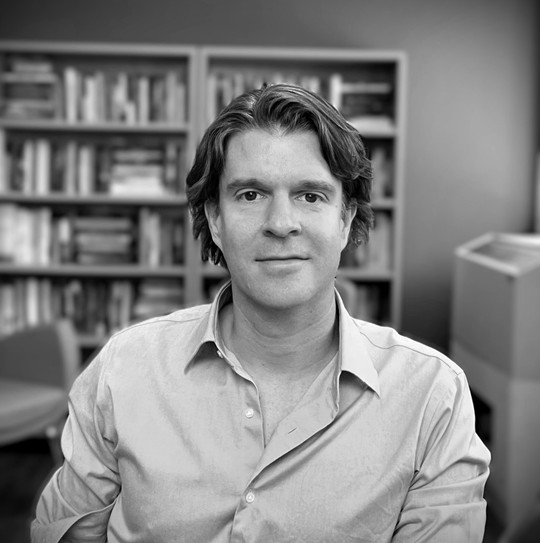
Kevin Lewis O’Neill is the Dean of Arts and Vice-Provost of Trinity College at the University of Toronto. He is also professor in the Department for the Study of Religion and the Centre for Diaspora and Transnational Studies in the Faculty of Arts and Science. A cultural anthropologist, O’Neill has written extensively on the politics of Christianity in Guatemala City. His books include City of God (California 2010), Secure the Soul (California 2015), Hunted (Chicago 2019), and the bilingual photography book Art of Captivity / Arte del Cautiverio with Benjamin Fogarty-Valenzuela (Toronto 2020). An online exhibit for the Art of Captivity can be found here.
A 2021 John Simon Guggenheim Fellow, O’Neill now writes about clerical sexual abuse. His first book on the topic is Unforgivable: An Abusive Priest and the Church that Sent Him Abroad (California 2025). The next will be a global history of clerical sexual abuse that begins near the Badlands of New Mexico.